
Cash Reserve Ratio (CRR) is the amount of funds that the banks have to keep with the Reserve Bank of India. If RBI decides to increase the percent of this, the available amount with the banks comes down. RBI is using this method (increase of CRR rate), to drain out the excessive money from the banks.

These are the highlights of the seventh bi-monthly monetary policy statement for 2019-20 by the RBI amid COVID-19 pandemic:

According to bankers, this is because the currency demand during the festival season is expected to remain strong.

In a mixed bag for HDFC Bank ahead of the parent HDFC's merger with itself, the Reserve Bank of India has declined to make exceptions on certain aspects, and has offered some leeway on others. The country's largest private sector lender, which is aiming to conclude the merger with the home finance major by July, had written to the central bank seeking certain forbearances after announcing the $40-billion merger in April last year. In an exchange filing this evening, HDFC Bank said it received a response from RBI on Thursday and also said that there are a few pending issues.

RBI had previously cut repo rate by 0.25 per cent each in January and March.

Highlights of the RBI monetary policy.

State Bank of India Chairman Pratip Chaudhuri again made a strong pitch for a reduction in banks' Cash Reserve Ratio (CRR) at the Reserve Bank's mid-quarter review of monetary policy scheduled September 7.
This cut was welcome not just for its well-planned timing, but also for its relative size; the RBI has, too often, moved with baby steps when strides are called for.
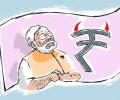
It is a classic case of extremes: The worst contraction in GDP along with the highest-ever levels of cash in the economy; and a severe dent in consumption together with strong growth in bank deposits and digital payments.
RBI Governor Duvvuri Subbarao on Tuesday defended the bank's decision to keep the key policy rate unchanged saying inflation could rise to above 8 per cent in the near-term.
Banks have asked for an exemption of statutory requirements such as the cash reserve ratio (CRR) and the statutory liquidity ratio (SLR) for lending to the infrastructure sector. While the CRR is a tool where banks have to set aside liquidity with RBI in proportion of the deposits mobilised by them, the SLR requires banks to invest 25 per cent of their liabilities in government securities to generate instant liquidity.
He said despite liquidity injection by RBI, borrowers should not expect reduction in interest rates for short- and medium-term loans. He, however, added that the measures announced by the government and RBI have starting yielding results.

The RBI has hiked repo or short-term lending rate up by 0.25 pc to 7.75 pc.

In view of the rising number of mobile and internet banking users, the Reserve Bank of India (RBI) has proposed to tighten norms related to the liquidity coverage ratio (LCR) by increasing the run-off factor for retail deposits. "Banking has undergone rapid transformation in recent years. "While increased usage of technology has facilitated the ability to make instantaneous bank transfers and withdrawals, it has also led to a concomitant increase in risks, requiring proactive management," the RBI said in the draft guidelines released on Thursday.

.jpg)
KC Chakrabarty who was appointed as RBI deputy governor in 2009, is considered frank with his views.

State Bank of India (SBI), India's largest lender, is looking to raise Rs 10,000 crore through 15-year infrastructure bonds as early as next week, said multiple sources aware of the development. Market participants expect a coupon in the range of 7.15-7.18 per cent for SBI's upcoming infrastructure bond issuance. This comes as demand for longer-tenor papers has remained strong in recent domestic capital market offerings.

Industry houses are emphatic with the RBI pruning repo rate and CRR by 0.25 per cent each after a long nine months in its third quarter monetary policy review.

The broader Nifty also slipped from record by falling 33.15 points at 10,081.50 as investors booked profits.

The banking system liquidity bounced back to surplus mode after three weeks, the Reserve Bank of India (RBI) data showed. This was due to government spending, according to dealers. The liquidity situation could further ease with the disbursement of the last tranche of incremental cash reserve ratio (I-CRR) worth Rs 50,000 crore on Saturday.
Mirroring weak cues from the overseas markets, the Sensex opened with a negative gap of 215 points at 10,765. The index thereafter tried to recover but slipped to lower levels after the Reserve Bank of India (RBI) announced its annual credit policy.

All categories of NRI deposits saw net inflows in July.
Within hours of RBI slashing the Cash Reserve Ratio (CRR) by 0.25 per cent, State Bank (SBI) on Tuesday hinted at a likely reduction in lending rates soon.

Chidambaram welcomes CRR cut as a good small step forward.

Real estate developers said on Tuesday that RBI's decision to cut cash reserve ratio will help improve the liquidity position of various sectors, including realty, but felt that interest rates should be brought down to boost housing demand.
The NSE Nifty ended at 3,044, up 158 points. The market breadth was fairly positive with over three advancing stocks for every declining share - out of 2,652 stocks traded, 1,970 advanced, 633 declined and the rest were unchanged today.
Since the start of the year, the RBI has had to contend with rising inflation and increased liquidity in the financial system causing it to raise CRR and repo rate to reign in the excess money.
The RBI's surprise rate hike may have been prompted by its inability to convince the government to cut excise duty on petrol and diesel and take other supply-side measures to tame runaway inflation, sources aware of the central bank's thinking said on Thursday. There has been a record Rs 10 a litre increase in petrol and diesel prices in a matter of 16 days beginning March 22, which has further fuelled the already high commodity prices. The RBI, which is mandated to ensure inflation is under 6 per cent, acted with a 0.40 per cent increase in repo rate to check prices before they went completely out of hand.
With the government proposing to give flexibility to the Reserve Bank of India in fixing prudential limits, bankers expect a cut in statutory liquidity ratio
A bill to amend Banking Regulation Act, which will enable RBI to lower the mandatory limits on statutory liquidity ratio for commercial banks, will be introduced in Parliament soon.

RBI on Tuesday slashed short-term lending rate by 0.25 per cent to 7.5 per cent, which the bankers read as not enough for an immediate cut in their lending rates.
Home loans and consumer goods loans are likely to remain high as the Reserve Bank of India kept its key policy rates unchanged during its Monetary Policy review on Tuesday.

Foreign institutional investors pumped in nearly $167.35 million (Rs 899.83 crore) into the local stock markets on Tuesday, according to the BSE provisional data.
The MSS limit has been raised from Rs 1,50,000 crore (Rs 1,500 billion) in the current financial year. This is the fourth time the government has raised the limit.

Some see CRR cut as tight liquidity continues.

Financial services firm AnandRathi analysed the key points of the policy soon after it was announced.

On July 15, the Reserve Bank put in place measures to restore stability in the foreign exchange market, including raising the Marginal Standing Facility and bank rates to 10.25 per cent and restricting access by way of repos to Rs 75,000 crore (Rs 750 billion).

The RBI, had, earlier in the day, hiked CRR by 0.75 per cent in two tranches, a move, it said, would help flush-out Rs 36,000 crore (Rs 360 billion) from the system.
